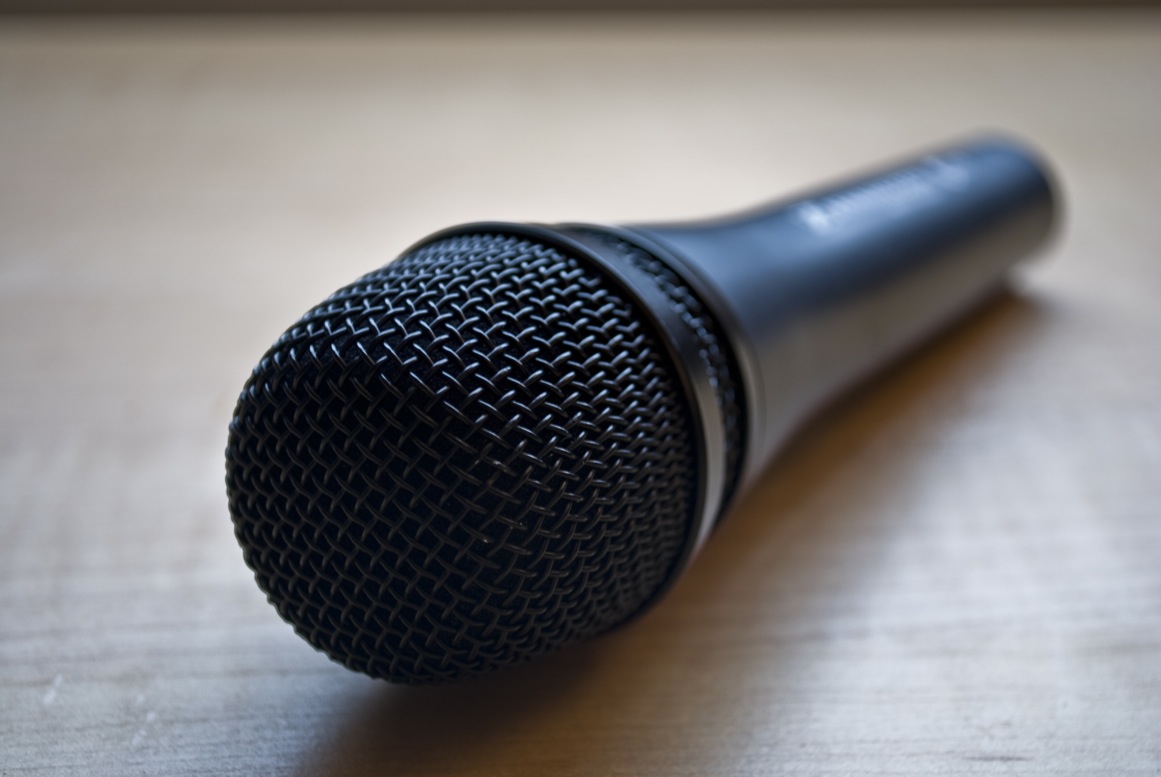
Selecting a microphone is the single most consequential hardware decision a podcaster makes. The room can be treated, the editing can be refined, but a poor capsule introduces noise and coloration that no software fully corrects. This article covers the principal microphone categories, the connector formats, and the acoustic characteristics that matter most in the kinds of spaces Polish creators typically record in.
USB vs XLR — the connector question
USB microphones convert the analogue signal to digital inside the microphone body, then transmit digital audio over a standard USB connection to a computer. This eliminates the need for a separate audio interface. XLR microphones output a balanced analogue signal that requires an audio interface or mixer before reaching the computer.
For a single-host setup in a quiet room, USB microphones are practical and capable. The Blue Yeti, Rode NT-USB Mini, and Samson Q2U are commonly cited examples. The Samson Q2U is notable for offering both USB and XLR outputs simultaneously, allowing a creator to begin with USB and later migrate to an interface without buying a new microphone.
XLR becomes worthwhile when two or more people record simultaneously in the same room, when the creator already owns an audio interface for music production, or when the long-term plan includes upgrading preamps independently of microphone changes.
Condenser vs dynamic — the capsule type
Condenser microphones use a thin electrically charged diaphragm that responds to pressure changes with high sensitivity and an extended frequency response. They capture detail well and typically exhibit a more open, airy character in the upper frequencies. The trade-off is that they also pick up more ambient noise — air conditioning, traffic, keyboard clicks, and reverb from reflective walls.
Dynamic microphones use electromagnetic induction and a heavier diaphragm. They are less sensitive and have a narrower frequency response but reject off-axis sound effectively. A dynamic microphone held or mounted close to the mouth picks up voice cleanly while attenuating background noise significantly. This characteristic makes dynamic microphones well suited to untreated rooms — the typical apartment bedroom or home office.
The Shure SM7B became a reference point for spoken-word recording partly because it requires close-mic technique, which naturally reduces room sound. The Electro-Voice RE20 is another dynamic microphone frequently found in radio broadcasting and is used in Polish radio stations for the same reason.
Polar patterns explained
A microphone's polar pattern describes from which directions it is sensitive to sound. The main patterns relevant to podcasting are:
- Cardioid — picks up sound from the front, rejects most sound from behind. Standard for single-voice recording.
- Supercardioid / Hypercardioid — narrower front pickup with a small lobe of sensitivity directly behind. Better rear rejection than cardioid but requires precise positioning.
- Bidirectional (figure-8) — captures front and rear equally, rejects the sides. Used when two people sit face-to-face across one microphone.
- Omnidirectional — equal sensitivity in all directions. Useful for room ambiance recording; rarely suitable for uncontrolled home environments.
Several USB microphones offer a switchable polar pattern selector. For solo recording, locking the pattern to cardioid and ignoring the other modes is the standard recommendation.
Frequency response and proximity effect
Most voice microphones are tailored to emphasise the 2–10 kHz range where consonants and speech intelligibility live. Some models add a presence peak around 5 kHz to make voices sound more forward in a mix. Published frequency response charts — available in the specifications section of manufacturer websites — show this shaping clearly.
Dynamic microphones exhibit a proximity effect: when the source is within 15–20 cm of the capsule, bass frequencies increase substantially. This effect is used deliberately by broadcasters to create a warm, intimate sound. Inexperienced podcasters sometimes find the effect excessive and are advised to either maintain consistent distance or use a high-pass filter set at 80–100 Hz in their editing software to attenuate the excess bass.
Recommended setups at different budget levels
Entry level (under 400 PLN): The Samson Q2U or Rode Podcaster provide functional results for home recording and remove the interface requirement. Acoustic treatment at this budget is as important as the microphone choice.
Mid level (400–1200 PLN): The Rode NT-USB+ or Focusrite Scarlett Solo paired with an Audio-Technica AT2020 or Rode NT1 condenser. This range introduces phantom power (required for condenser microphones) and improved analogue electronics.
Professional level (above 1200 PLN): The Shure SM7B, Electro-Voice RE20, or Neumann TLM 102 with a quality preamp such as the Universal Audio Volt 2 or Focusrite Scarlett 2i2. At this level, the recording chain is rarely the limiting factor — room acoustics and microphone technique become the primary variables.
Accessories that matter
A microphone arm or boom stand holds the microphone at mouth level without occupying desk surface and allows repositioning during a recording session. Pop filters or windshields attenuate plosive consonants (particularly P and B sounds) that cause brief low-frequency bursts in the recording. A shock mount decouples the microphone from the stand, preventing desk vibrations from reaching the capsule.
For XLR setups, the quality of the cable between microphone and interface affects noise floor marginally but is rarely the primary concern in home studios.
Further reading: Microphone — Wikipedia provides a comprehensive technical overview of capsule types and transducer principles.